
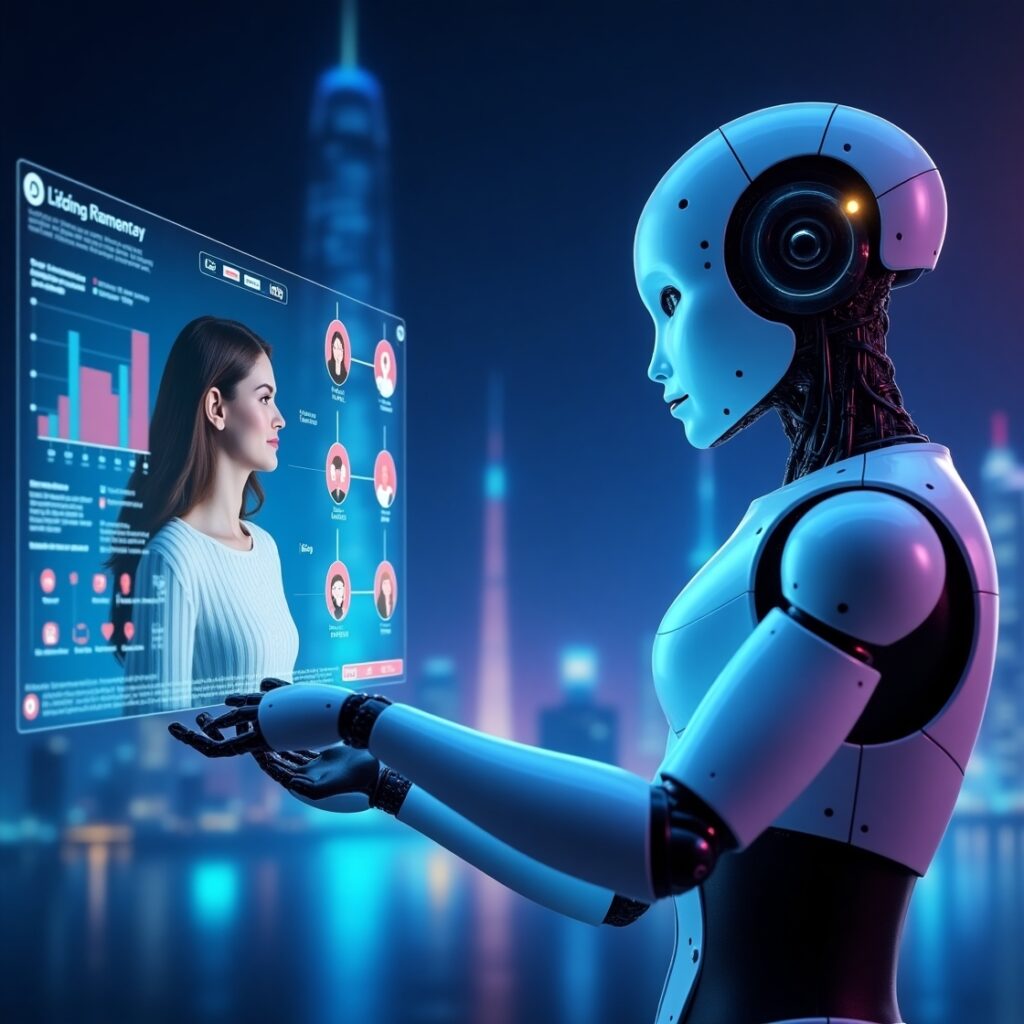
Influencer marketing has matured from a fad to a vital digital marketing channel. However, in 2025, it is not only the influencers that are shaping this space—Artificial Intelligence (AI) is transforming how brands will discover, manage, optimize, and scale influencer campaigns. AI capabilities for analyzing and automating data is making Influencer Marketing Trends simpler and much more effective.
In this piece, we will look at how AI is transforming every moment of influencer marketing including discovery and performance forecasting, to content creation, and compliance tracking.
1. The AI Revolution in Marketing
Artificial Intelligence refers to the ability of a computer or other machine to simulate human intelligence or processes through the use of algorithms to process information, learn from information, and make decisions or predictions. AI is prevalent in influencer marketing primarily to automate repetitive tasks, provide insights that are actionable, and better track ROI with precision.
With influencer marketing expected to reach $24 billion by 2025, AI isn’t just an option; it offers a competitive advantage.
2. Smarter Influencer Discovery
Finding the right influencer used to be a lengthy, uncertain and complicated process. Today, AI discovery technologies are completely changing how brands search for creators who align with their mission and goals.
AI is Helping Discovery in Several Ways:
Advanced Filtering: With AI tools, it is possible to analyze engagement rates, follower demographics, content type, sentiment, and inauthentic followers.
Persona Matching: Algorithms can match influencers with brand values, campaign goals, and audience segments.
Look-a-like Discovery: AI can suggest similar creators based on successful engagements or engagement rates.
Illustration: CreatorIQ and Upfluence employ machine learning to rank-and-score influencers based on fit and predicted performance.
3. Predictive Analytics & Campaign Forecasting
One of the greatest contributions of AI is forecasting campaign performance data before one post has even been published.
What AI can tell you:
- Your estimated reach, impressions, and engagement
- Your Click-through and conversion rates
- Your best posting times and types of content
- Budgeting advice based on amplification and your campaign history
Why it matters: this affords marketers to make data-driven decisions, reduce risk, and set realistic KPIs based on the predictive performance models.
Example: Influencity’s AI recommending which influencers will yield the highest ROI with campaign history and audience behaviours.
4. AI Content Creation & Automation
AI is not only analyzing content, but generating content. From creating captions, images, and even deepfake videos, AI driven tools have never made it easier for influencers and brands to produce content at scale, faster than before.
AI & Content Creation:
- Caption Generators: Tools like Jasper AI help create enticing and on-brand captions that also appeal to the platform’s algorithm.
- Visual Tools: Magic Design of Canva and Lensa AI help create images that tie all visuals consistent to the campaign.
- Voice Cloning & Virtual Influencers: Synthetic voices and AI avatars to create branded content 24/7 without human contact.
This automation gives creative teams the capacity to focus on their strategy while AI handles the volume and consistency as opposed to human attention.
5. Dynamic Personalization at Scale
AI allows brands to personalize influencer content across varying audience segments—without launching entirely new campaigns.
How AI Personalizes Content:
- Adjusts messaging for various age, location, or language segments
- Automatically customizes product recommendations according to viewer behavior
- Changes CTAs and visuals to align with platform-specific trends
Example: AI software can create varying Instagram Stories for varying cities, featuring local influencers and local product availability.
6. Real-Time Monitoring & Sentiment Analysis
Once a campaign is live, AI doesn’t idly stand by—it actively tracks each interaction.
AI-Powered Monitoring Features:
- Monitors likes, shares, comments, and mentions in real-time
- Identifies outliers (spam, artificial engagement, negative spikes)
- Monitors brand sentiment via NLP (Natural Language Processing)
Sentiment analysis enables marketers to know not only how many people are discussing a campaign—but what they feel about it.
Example: Tools such as Brandwatch or HypeAuditor utilize AI to mark posts that need immediate PR attention or posts that are creating a lot of positive buzz.
7. Fraud Detection & Authenticity Scoring
Influencer fraud is no joke. AI detects creators who have purchased followers, faked engagement, or leave bot comments.
AI Seeks Out:
- Unexpected spikes in follower numbers
- Insistent or irrelevant comment patterns
- Low-quality audience (bots, dormant users)
- Engagement-to-follower ratio irregularities
Outcome: Brands don’t waste budgets on fake influencers and concentrate on authentic voices that deliver authentic results.
8. AI-Powered Influencer Whitelisting & Ad Optimization
Whitelisting enables brands to post paid ads across influencer accounts. AI enhances this process.
How AI Can Benefit Whitelisting:
- Identifies best-performing influencer content automatically
- A/B tests across several creatives, captions, and CTAs
- Reallocates budget to top-performing ad sets in real time
Example: Meta’s Branded Content Ads and TikTok Spark Ads leverage AI for optimizing influencer content in paid campaigns, dramatically enhancing ROI.
9. Performance Measurement & Attribution
Influencer marketing ROI has always been difficult to prove—but AI is bridging the gap between content and conversions.
AI Increases Attribution By:
- Measuring cross-platform user journeys
- Mapping which influencer engagement resulted in a sale
- Applying machine learning to attribute value to every touchpoint
- This allows brands to safely scale what works, while eliminating wasteful expenditure.
Tools to Watch: Affable.ai, GRIN, and Captiv8 provide premium performance dashboards driven by AI.
10. Virtual Influencers: The Future Is Now
AI-created influencers such as Lil Miquela, Noonoouri, or even fully personalized brand avatars are on the rise. These virtual influencers are driven exclusively by machine learning and digital creation.
Why Brands Love Virtual Influencers:
- No scheduling conflicts or PR risks
- Total creative control over visuals, voice, and messaging
- Scalable for global campaigns with localized versions
Example: Prada, Samsung, and Puma have tried virtual influencers to target Gen Z audience.
11. AI in Influencer Contracting & Compliance
AI is also enhancing legal and ethical practices of influencer marketing.
Intelligent Contracting Features:
- Automated influencer contracts from campaign specifications
- Disclosure clause suggestions, timing, and usage rights
- Reminders on, and enforcement of, FTC/ASCI compliance
Compliance Checkers: Platforms such as Lumanu and CreatorIQ now feature AI blocks that check influencer posts for omitted #ad or #sponsored taggings.
12. Challenges & Ethical Considerations
Although AI offers extraordinary benefits, it’s not all roses:
- Data privacy: AI is built on vast amounts of personal and behavioral data which poses privacy risks.
- Misuse of deepfakes: It is unlikely that synthetic content will reveal itself as misrepresentation unless it is labelled.
- Algorithmic bias: AI can reinforce human bias unless learned from ethically balanced data sets.
Use of AI responsibly will be vital as the capability has been more widely adopted.
Conclusion: The Future of Influencer Marketing is AI
From discovery to conversion, AI is streamlining the influencer marketing process. AI gives brands the power to make better decisions, produce better quality content, and analyze actual results. As this technology becomes commonplace and more sophisticated, marketers that leverage it will enjoy a significant edge.
Although AI may elevate strategy and effectiveness, marketing needs the human component. Trust, originality, and authenticity – the basis of influencer marketing, cannot be replaced. Most successful campaigns in 2025 and beyond will involve AI optimization taking place upon the human mental quotient.